Does Mold Cause Skin Allergies and Breathing Problems?
How mold exposure can relate to skin and respiratory symptoms—and how to assess what you are experiencing.
Allergic and respiratory symptoms can have many causes. The following answers cover common questions about mold-related irritation and when medical guidance is appropriate.
Frequently asked questions
Can mold cause a skin rash without you touching it?
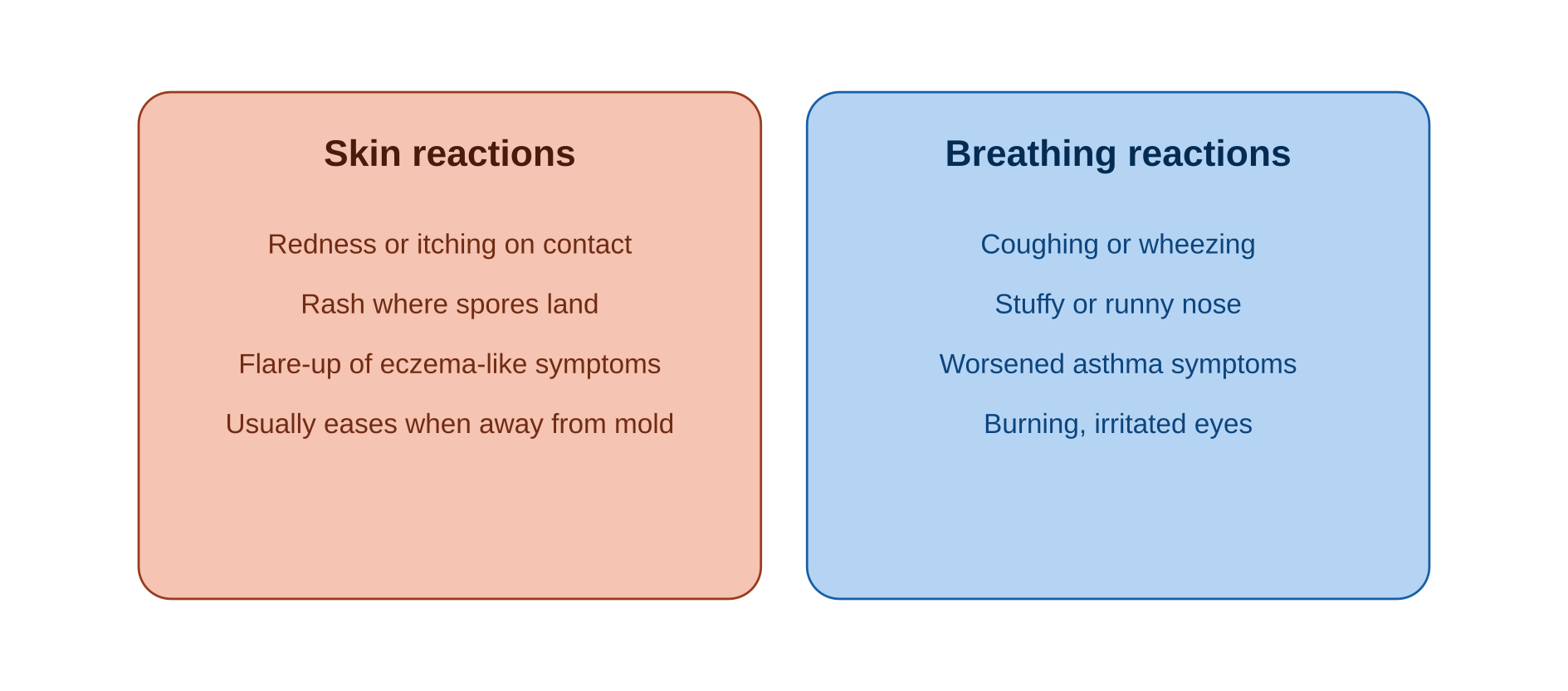
Yes, airborne mold spores settling on skin can trigger an allergic reaction even without direct contact with a mold-affected surface. Sensitive individuals may develop redness or a rash simply from being in a space with elevated mold spore levels.
What does a mold allergy rash look like?
A mold allergy rash typically appears as red, itchy patches, sometimes resembling hives or an eczema flare-up. It usually appears on exposed skin and improves once exposure to the mold source stops.
Can mold exposure trigger asthma attacks?
Yes, mold spores are a known asthma trigger, and people with asthma or a mold allergy can experience more severe respiratory reactions, including wheezing and shortness of breath, when exposed.
How long do mold allergy symptoms last after exposure?
Symptoms generally ease within a few hours to a couple of days after leaving the affected environment, though this varies by individual sensitivity and how long the exposure lasted.
Is black mold worse for breathing than other mold types?
Black mold (Stachybotrys chartarum) has a reputation for being more dangerous, but any mold type can cause respiratory symptoms in sensitive individuals. Species identification via lab testing is the only way to know exactly what type is present.
SOURCES
This article is for general information only and is not medical advice. Seek prompt medical care for serious or worsening breathing symptoms.