How to Check If Mold Is Growing
A practical look at visible signs, hidden hotspots, and the limits of DIY testing.
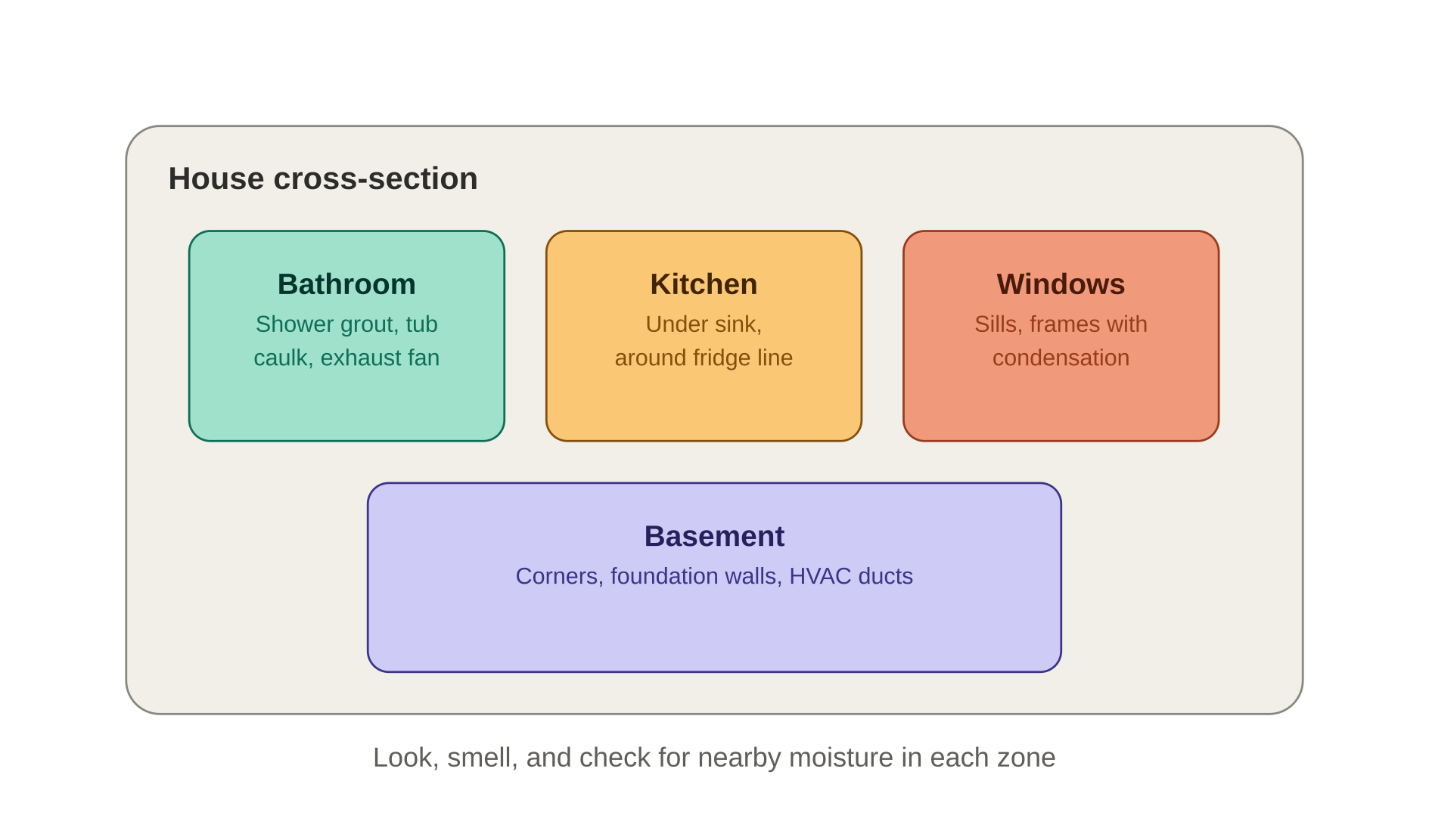
Visible growth, persistent moisture, and musty odors are useful signals to investigate. These answers explain what you can look for before deciding whether to seek professional help.
Frequently asked questions
How can you tell if mold is behind drywall?
Look for indirect signs: a persistent musty smell, discoloration or bubbling on the wall surface, peeling paint, or a wall that feels damp to the touch. A moisture meter or a professional inspection with a borescope can confirm mold behind drywall without demolition.
What does hidden mold smell like?
Hidden mold typically produces a musty, earthy odor often described as similar to wet socks or damp soil. If you notice this smell in a specific area without visible mold, it is a strong signal to investigate further.
How long does it take mold to grow after water damage?
Mold can begin growing within 24 to 48 hours after water damage if the area is not dried out. This is why fast drying after leaks or flooding is one of the most effective ways to prevent mold growth.
Can an air purifier detect mold?
No, standard air purifiers filter airborne particles but do not detect or identify mold. Dedicated mold test kits or professional air sampling are needed to confirm whether mold spores are present.
Do mold test kits actually work?
DIY test kits can give a useful first indication, especially surface swab tests on visible growth. Air quality petri-dish kits are less precise since every home has some baseline level of airborne spores, so results need context and often follow-up from a professional.
SOURCES
This article is for general information only. A qualified inspection professional can help assess a suspected mold or moisture problem.